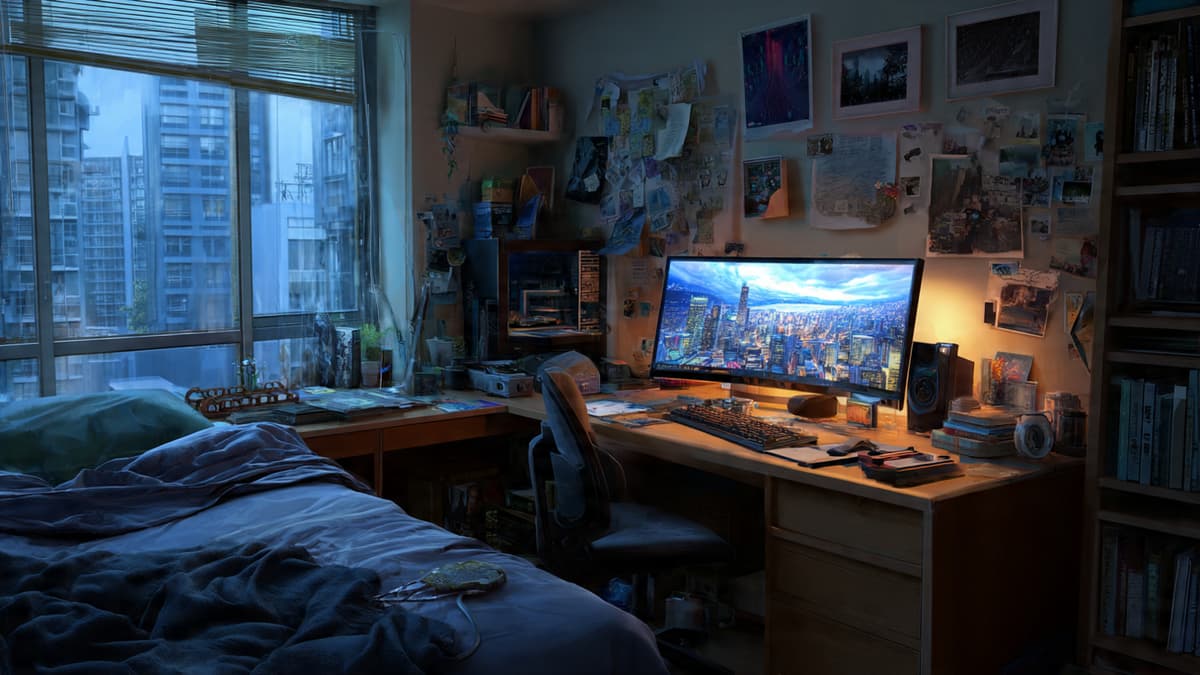
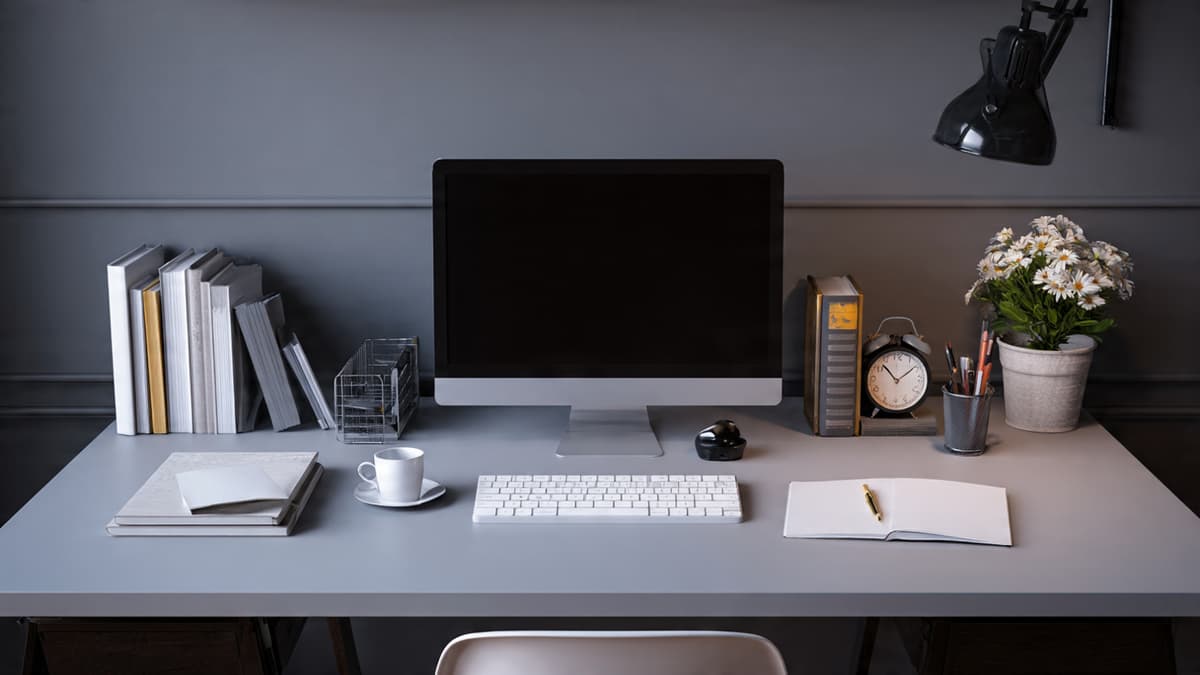
Bedroom Desk Setup Layout

A desk in a bedroom can work — but only if the layout is intentional. These before-and-after examples show how small changes dramatically improve comfort, focus, and space.

Bedroom Desk Layout Rules at a Glance

  • Visually separate your desk from your bed whenever possible
  • Position screens to avoid direct or rear-facing window glare
  • Leave enough clearance to fully move your chair
  • Scale desk size to the room, not the gear you want someday
  • Reduce visual clutter in your bed’s line of sight

How to Decide Your Bedroom Desk Layout in 10 Minutes

You don’t need design software or a full room remodel to pick a good desk layout. Follow this quick, practical checklist to avoid the most common mistakes before moving any heavy furniture.

  1. 1. Measure your usable wall space (not just the room)

    Measure the width of each wall where a desk could realistically go. Exclude areas blocked by doors, closets, radiators, or low windows. Write down the actual usable width, not the full wall length.

    As a rule of thumb, you want at least 10–12 inches of clearance on one side of the desk for chair movement or walking space.

  2. 2. Identify your primary light source and when you work

    Stand in your bedroom during the time of day you usually work or study. Note which direction natural light enters and where shadows fall.

    Ideally, your desk should sit perpendicular to the main window. Avoid placing your monitor directly in front of or behind a window, which causes glare and eye strain.

  3. 3. Decide where you do not want to see your desk from

    Sit or lie down on your bed and look around the room. Ask yourself: where does my eye naturally rest?

    Try to position your desk so it is not directly in your line of sight when resting. This helps your brain associate the bed with sleep instead of unfinished work.

  4. 4. Test chair clearance with real movement

    Pull a chair into the proposed desk position and fully sit down, stand up, and roll backward. You should be able to move at least 24–30 inches behind the chair without hitting furniture.

    If you have to twist sideways or squeeze past your chair, the layout will feel annoying every single day.

  5. 5. Sit at the desk at night with the lights on

    This step is often skipped and causes problems later. Turn on your bedroom lights at night and sit at the desk as if you were working.

    Check for screen reflections, harsh overhead lighting, or dark shadows. If the desk feels uncomfortable at night, you’ll subconsciously avoid using it or feel fatigued faster.

Quick takeaway: The best bedroom desk layout is the one that disappears when you’re resting and supports you when you’re working. If your setup passes these five checks, you’re already ahead of most people.

1. Desk Placement vs Bed Position

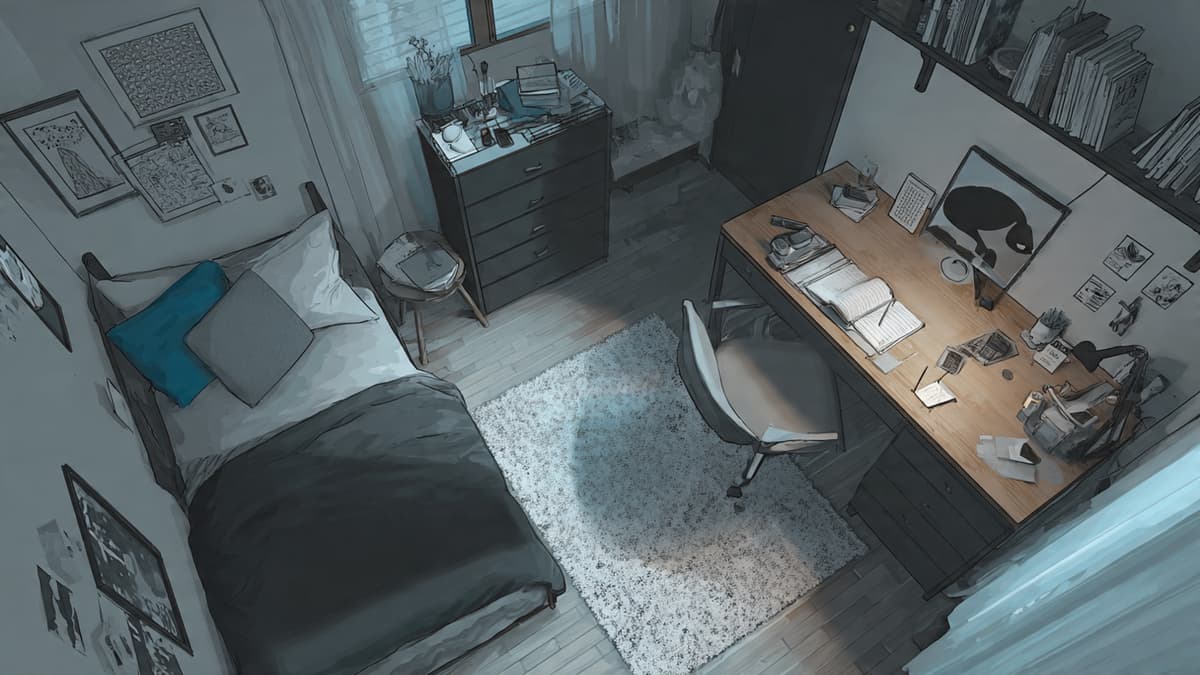
When the desk is placed directly beside or facing the bed, work and rest blend together.

Before
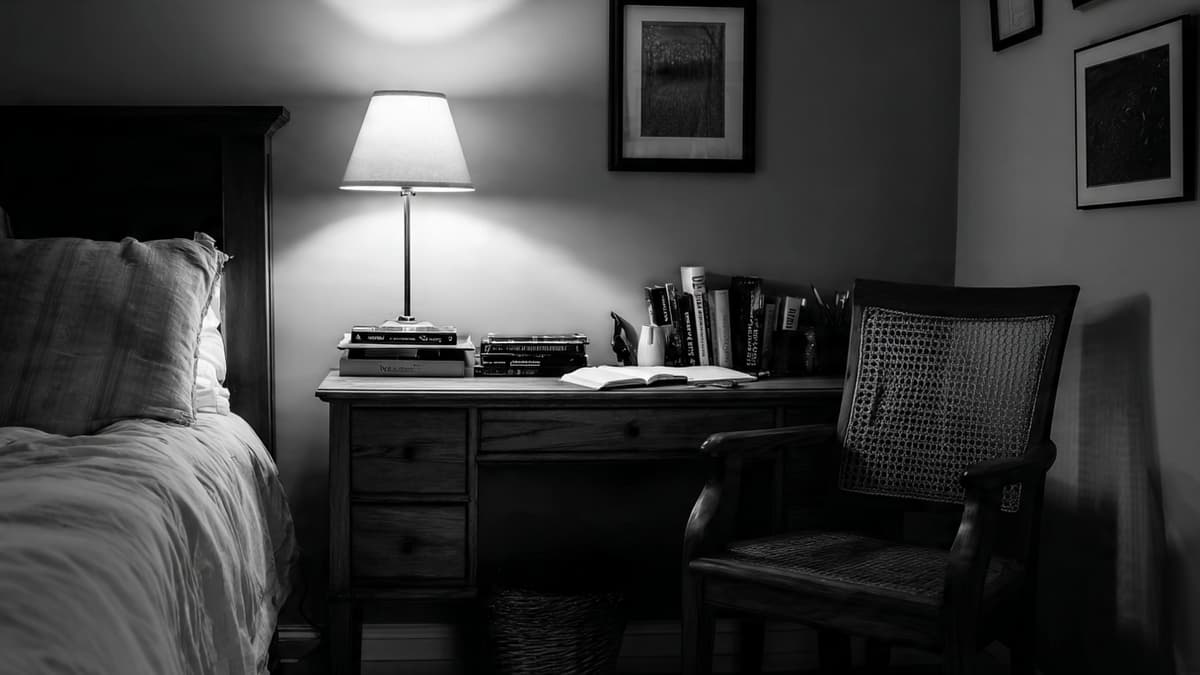
Desk placed directly beside the bed causing poor layout
  • Work and sleep areas visually overlap
  • Desk stays in your line of sight from bed
  • Makes it harder to mentally disconnect from work

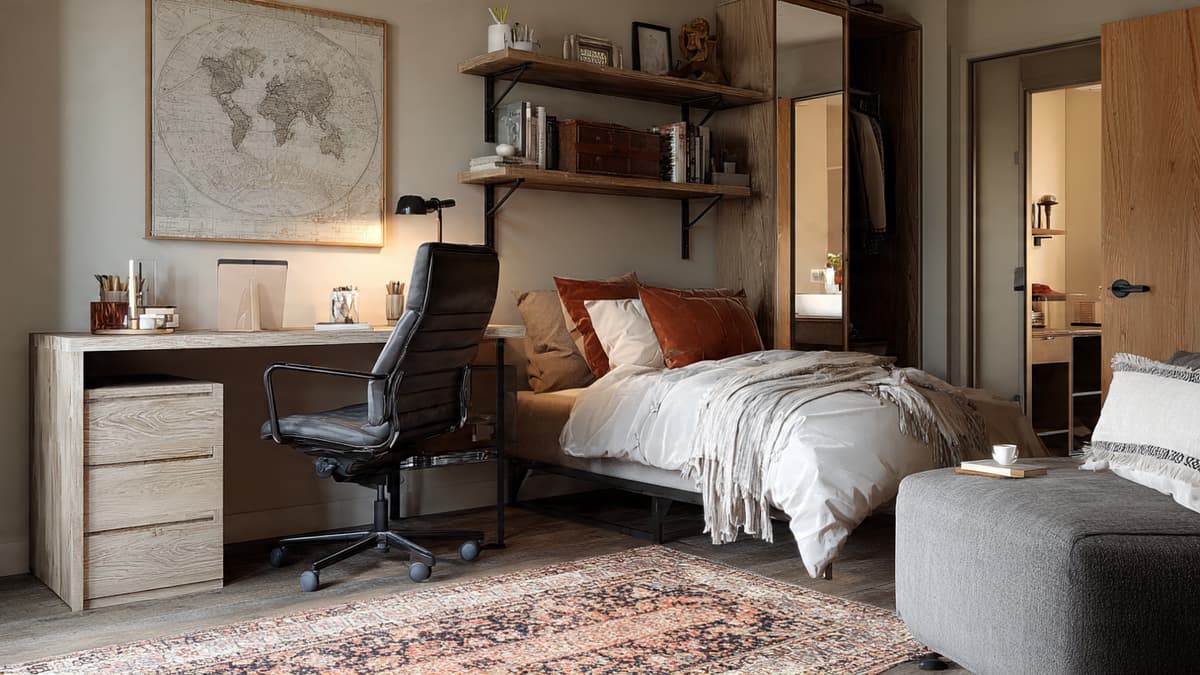
After
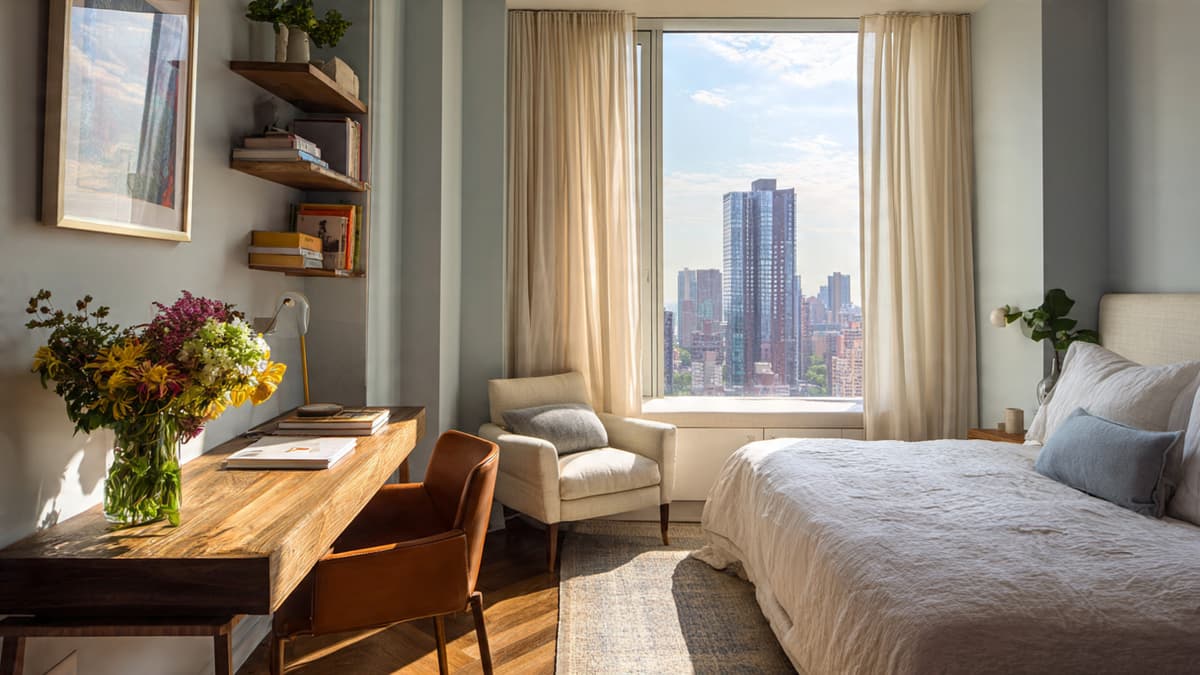
Desk repositioned away from bed with clear separation
  • Clear visual separation between work and rest
  • Desk is no longer the focal point from the bed
  • Improves focus during work and relaxation during sleep

Personal insight

Ultimately this will come down to where your doors and windows are positioned relative to each other, along with the dimensions of your bedroom. Try your best to position for the least number of distractions possible. Your bed will cue you to sleep subconsciously along your devices (phone, tablet, gaming console etc). If natural lighting is difficult to modulate, consider curtains for different times of the day.
2. Wall Choice and Natural Light

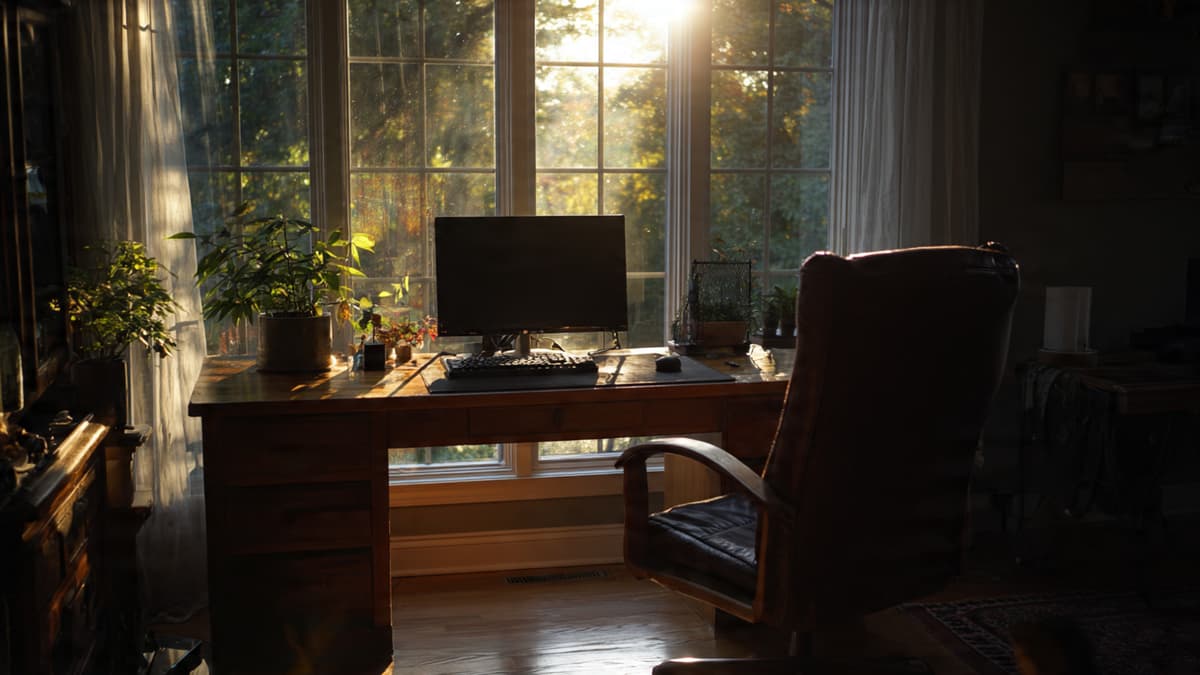
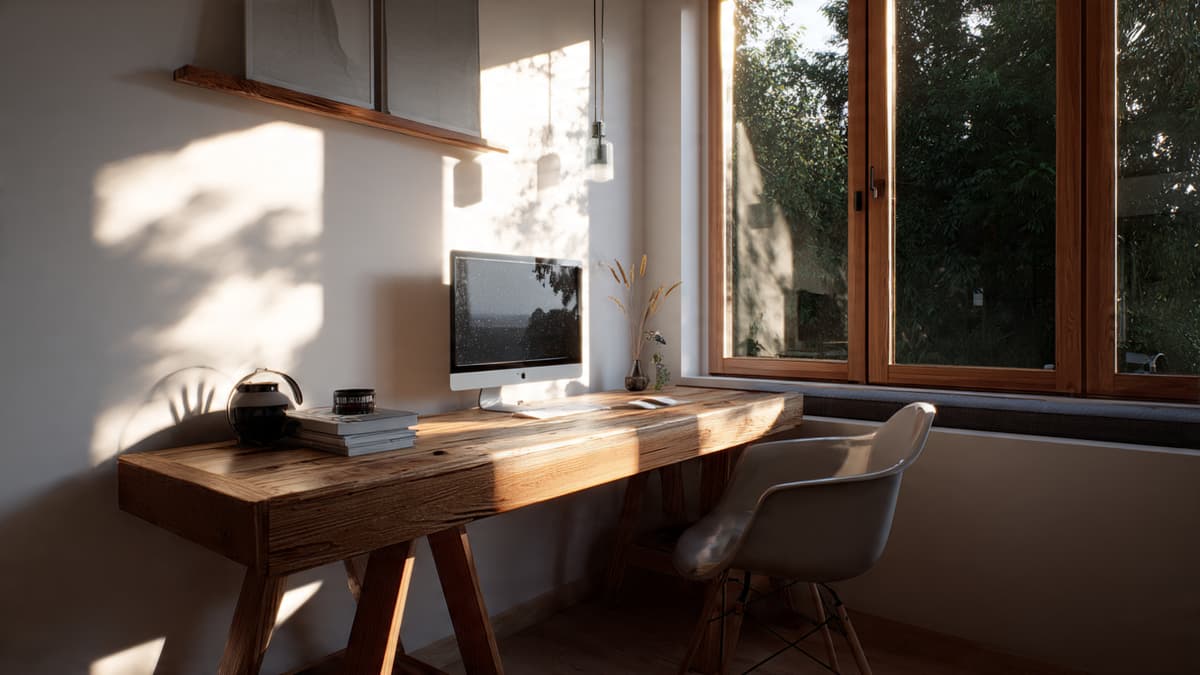
Poor wall placement often causes glare or uneven lighting.

Before

Desk facing window causing screen glare
  • Screen glare from direct window exposure
  • Harsh lighting at certain times of day
  • Eye strain during long sessions

After

Desk positioned perpendicular to window for balanced light
  • Balanced natural light throughout the day
  • Reduced reflections on the monitor
  • More comfortable, consistent lighting

Personal insight

Natural light is critical for proper circadian rhythms (our natural sleep wake cycle), so make sure you are getting exposure through your windows or a light generating device that mimics that sun that can be placed on your desk. However, we don't want the sun to be distracting by shining in our eyes and making work and entertainment strenuous. This effect largely depends on where the sun rises relative to your bedroom windows and when you work the most.

3. Chair Clearance and Walkways

Tight clearances make a desk frustrating to use.

Before

Desk layout with blocked chair movement
  • Chair hits furniture when standing up
  • Walkway feels cramped or blocked
  • Daily use feels frustrating

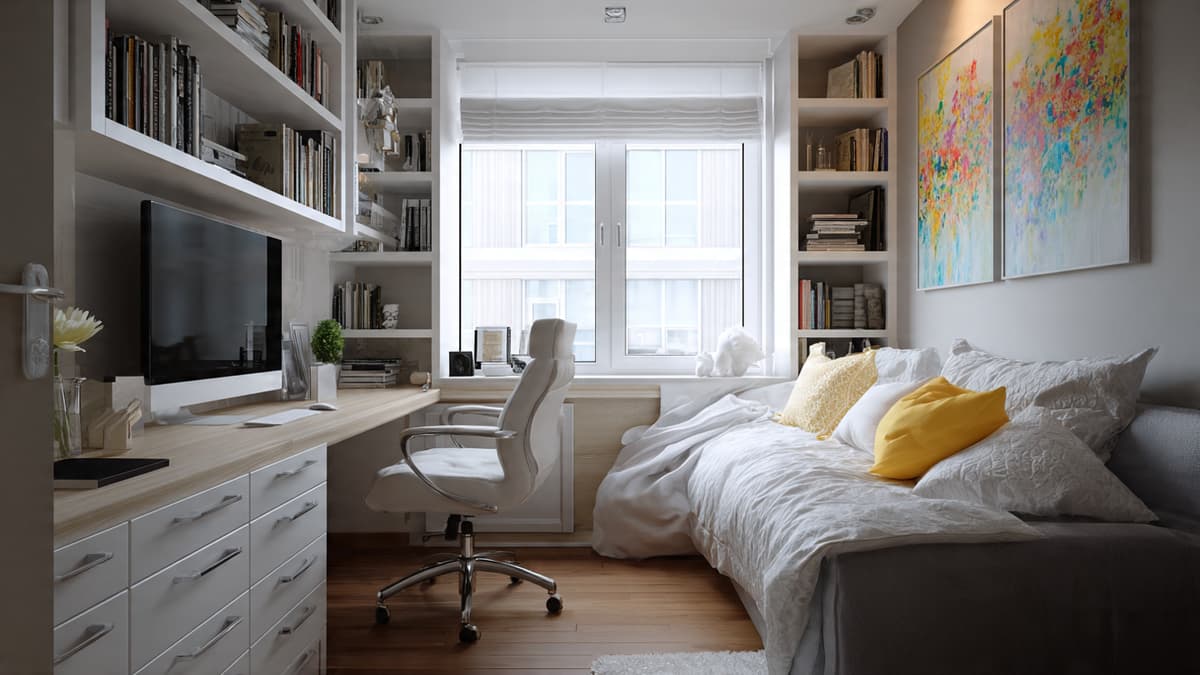
After

Desk layout with proper chair clearance
  • Smooth chair movement
  • Clear walking paths around the desk
  • Room feels larger and easier to use

Personal insight

In a perfect world we want a clean walkway between your bed and desk chair so that we are performing other tasks, you are not struggling and stubbing your toe (this is the absolute worst lol). Make sure your desk is wide and deep enough to tuck your chair in when not in use is helpful, along with choosing your bedroom layout that allow for space to have your chair move away from the desk for stretching out.

4. Desk Size vs Room Scale

Oversized desks overwhelm small bedrooms.

Before

Oversized desk dominating bedroom
  • Desk dominates the room visually
  • Reduces usable floor space
  • Makes the bedroom feel crowded

After

Compact desk scaled properly for bedroom
  • Desk fits the scale of the room
  • Improved walking space
  • More balanced, intentional layout

Personal insight

Desk size is heavily dependent on your desk needs. Do you need multiple monitors for multi-tasking purposes?, or do you need a basic laptop for schoolwork? Your needs will likely change over time so always consider future proofing your setup when space and budget allow. I recommend keeping the desk no wider than your largest piece of furniture in the room.

5. Visual Clutter and Sightlines

Too much visible gear makes bedrooms feel chaotic.

Before

Cluttered desk visible from bed
  • Cables and gear dominate the view
  • Desk feels visually noisy
  • Bedroom feels less relaxing

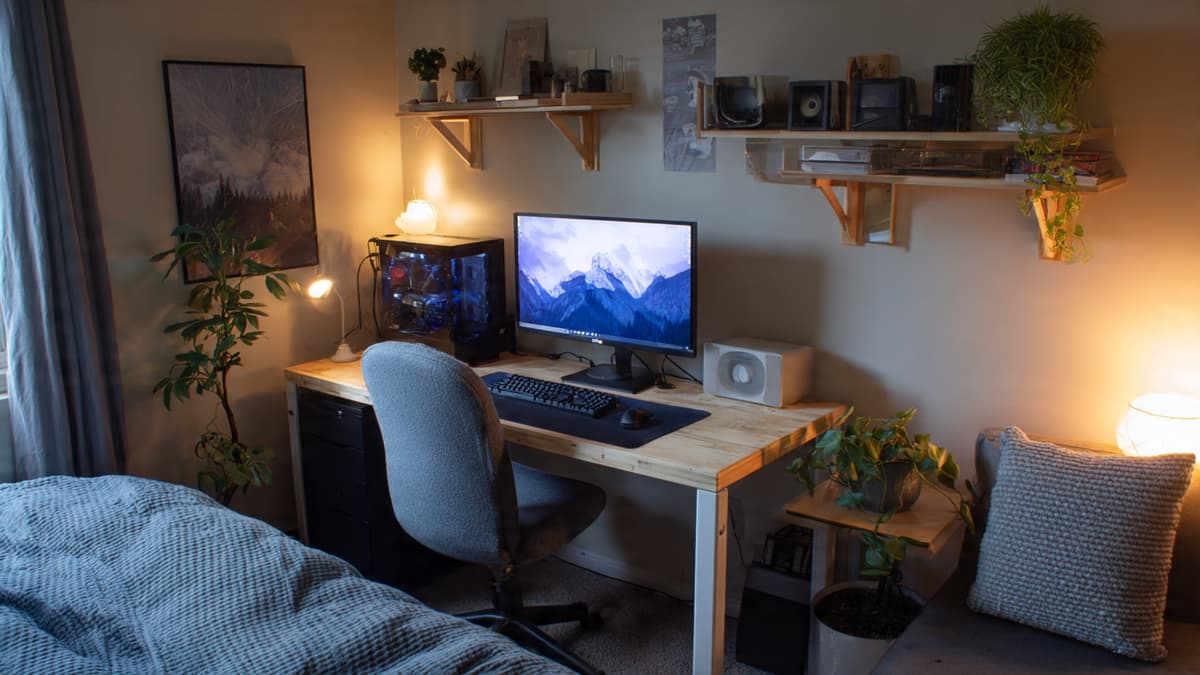
After

Clean desk with minimal visual clutter
  • Cleaner sightlines from the bed
  • Less visual distraction
  • Room feels calmer and more intentional

Personal insight

Remember, the more items you have on your desk, the more likely you are to go off task. That being said, make sure you have what you need. A great starting point is having a water bottle, headphones and an ergonomic device holder (if you need the device). Try not to include your phone in this setup. As an optional accessory, consider a simple plant if you have enough space.